
JACN Did you know that you can get alerts when a new issue is online?
HOME HELP FEEDBACK SUBSCRIPTIONS ARCHIVE SEARCH TABLE OF CONTENTS
 QUICK SEARCH:   [advanced]


This Article
Right arrow Full Text
Right arrow Full Text (PDF)
Services
Right arrow Similar articles in this journal
Right arrow Similar articles in PubMed
Right arrow Alert me to new issues of the journal
Right arrow Download to citation manager
Right arrow reprints & permissions
Citing Articles
Right arrow Citing Articles via HighWire
Right arrow Citing Articles via Google Scholar
Google Scholar
Right arrow Articles by Setchell, K. D. R.
Right arrow Search for Related Content
PubMed
Right arrow PubMed Citation
Right arrow Articles by Setchell, K. D. R.
Journal of the American College of Nutrition, Vol. 20, No. 90005, 354S-362S (2001)
Published by the American College of Nutrition

Soy Isoflavones—Benefits and Risks from Nature’s Selective Estrogen Receptor Modulators (SERMs)

Kenneth D. R. Setchell, PhD

Department of Pediatrics, Children’s Hospital Medical Center, Cincinnati, Ohio

Address reprint requests to: Kenneth D. R. Setchell, PhD, Professor of Pediatrics, Director, Clinical Mass Spectrometry, Children’s Hospital Medical Center, 3333 Burnet Avenue, Cincinnati, Ohio 45229. Email: SETCK0{at}CHMCC.ORG

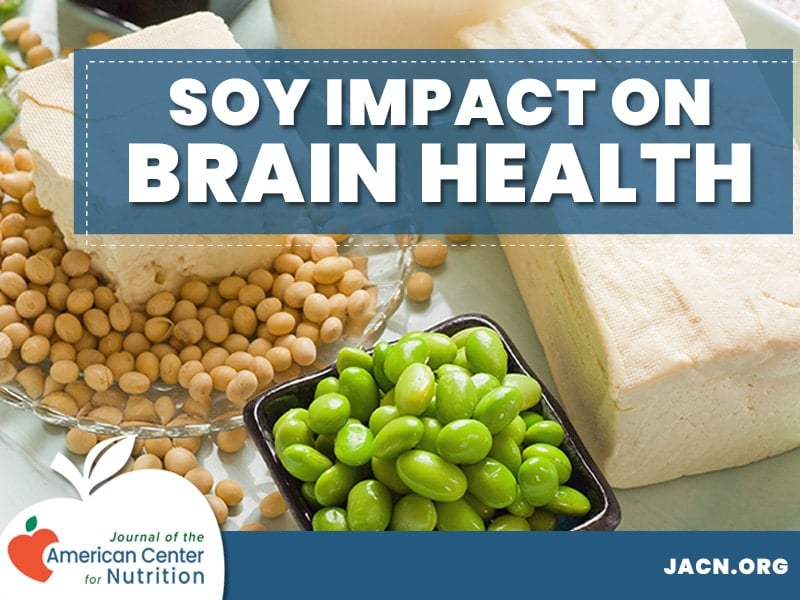
Phytoestrogens have become one of the more topical areas of interest in clinical nutrition. These non-nutrient bioactive compounds are ubiquitous to the plant kingdom and possess a wide range of biological properties that contribute to the many different health-related benefits reported for soy foods and flaxseeds—two of the most abundant dietary sources of phytoestrogens. Reviewed is the recent knowledge related to their pharmacokinetics and clinical effects, focusing mainly on isoflavones that are found in high concentrations in soy foods. Arguments are made for considering soy isoflavones as natural selective estrogen receptor modulators (SERMs) based upon recent data of their conformational binding to estrogen receptors. Rebuttal is made to several key and important issues related to the recent concerns about the safety of soy and its constituent isoflavones. This article is not intended to be a comprehensive review of the literature but merely highlight recent research with key historical perspectives.

Key words: soy isoflavones, phytoestrogens, pharmacokinetics, phytoprotectants


This article has been cited by other articles:


Home page
J EndocrinolHome page
R. Singhal, K. Shankar, T. M Badger, and M. J Ronis
Hepatic gene expression following consumption of soy protein isolate in female Sprague-Dawley rats differs from that produced by 17{beta}-estradiol treatment
J. Endocrinol., July 1, 2009; 202(1): 141 - 152.
[Abstract] [Full Text] [PDF]


Home page
Exp. Biol. Med.Home page
J.-R. Chen, R. Singhal, O. P. Lazarenko, X. Liu, W. R. Hogue, T. M. Badger, and M. J. J. Ronis
Short Term Effects on Bone Quality Associated with Consumption of Soy Protein Isolate and Other Dietary Protein Sources in Rapidly Growing Female Rats
Experimental Biology and Medicine, November 1, 2008; 233(11): 1348 - 1358.
[Abstract] [Full Text] [PDF]


Home page
Am. J. Clin. Nutr.Home page
A. A Thorp, P. R. Howe, T. A Mori, A. M Coates, J. D Buckley, J. Hodgson, J. Mansour, and B. J Meyer
Soy food consumption does not lower LDL cholesterol in either equol or nonequol producers
Am. J. Clinical Nutrition, August 1, 2008; 88(2): 298 - 304.
[Abstract] [Full Text] [PDF]


Home page
CA Cancer J ClinHome page
C. Duffy, K. Perez, and A. Partridge
Implications of Phytoestrogen Intake for Breast Cancer
CA Cancer J Clin, September 1, 2007; 57(5): 260 - 277.
[Abstract] [Full Text] [PDF]


Home page
Nephrol Dial TransplantHome page
A. Cupisti, L. Ghiadoni, C. D'Alessandro, I. Kardasz, E. Morelli, V. Panichi, D. Locati, S. Morandi, A. Saba, G. Barsotti, et al.
Soy protein diet improves endothelial dysfunction in renal transplant patients
Nephrol. Dial. Transplant., January 1, 2007; 22(1): 229 - 234.
[Abstract] [Full Text] [PDF]


Home page
Am. J. Clin. Nutr.Home page
C. Atkinson, J. W Lampe, D. Scholes, C. Chen, K. Wahala, and S. M Schwartz
Lignan and isoflavone excretion in relation to uterine fibroids: a case-control study of young to middle-aged women in the United States.
Am. J. Clinical Nutrition, September 1, 2006; 84(3): 587 - 593.
[Abstract] [Full Text] [PDF]


Home page
Am. J. Clin. Nutr.Home page
T. A Ryan-Borchers, J. S. Park, B. P Chew, M. K McGuire, L. R Fournier, and K. A Beerman
Soy isoflavones modulate immune function in healthy postmenopausal women
Am. J. Clinical Nutrition, May 1, 2006; 83(5): 1118 - 1125.
[Abstract] [Full Text] [PDF]


Home page
J. Pharmacol. Exp. Ther.Home page
M. L. Olson, M. E. Kargacin, T. W. Honeyman, C. A. Ward, and G. J. Kargacin
Effects of Phytoestrogens on Sarcoplasmic/Endoplasmic Reticulum Calcium ATPase 2a and Ca2+ Uptake into Cardiac Sarcoplasmic Reticulum
J. Pharmacol. Exp. Ther., February 1, 2006; 316(2): 628 - 635.
[Abstract] [Full Text] [PDF]


Home page
Am. J. Clin. Nutr.Home page
K. F Adams, P. D Lampe, K. M Newton, J T. Ylvisaker, A. Feld, D. Myerson, S. S Emerson, E. White, J. D Potter, and J. W Lampe
Soy protein containing isoflavones does not decrease colorectal epithelial cell proliferation in a randomized controlled trial
Am. J. Clinical Nutrition, September 1, 2005; 82(3): 620 - 626.
[Abstract] [Full Text] [PDF]


Home page
Am. J. Physiol. Regul. Integr. Comp. Physiol.Home page
D. A. Schreihofer, K. D. Do, and A. M. Schreihofer
High-soy diet decreases infarct size after permanent middle cerebral artery occlusion in female rats
Am J Physiol Regulatory Integrative Comp Physiol, July 1, 2005; 289(1): R103 - R108.
[Abstract] [Full Text] [PDF]


Home page
Am. J. Clin. Nutr.Home page
S. Zhan and S. C Ho
Meta-analysis of the effects of soy protein containing isoflavones on the lipid profile
Am. J. Clinical Nutrition, February 1, 2005; 81(2): 397 - 408.
[Abstract] [Full Text] [PDF]


Home page
Biol. Reprod.Home page
V. Selvaraj, M. A. Zakroczymski, A. Naaz, M. Mukai, Y. H. Ju, D. R. Doerge, J. A. Katzenellenbogen, W. G. Helferich, and P. S. Cooke
Estrogenicity of the Isoflavone Metabolite Equol on Reproductive and Non-Reproductive Organs in Mice
Biol Reprod, September 1, 2004; 71(3): 966 - 972.
[Abstract] [Full Text] [PDF]


Home page
J. Nutr.Home page
R. J. Merritt and B. H. Jenks
Safety of Soy-Based Infant Formulas Containing Isoflavones: The Clinical Evidence
J. Nutr., May 1, 2004; 134(5): 1220S - 1224S.
[Abstract] [Full Text] [PDF]


Home page
Cancer Epidemiol. Biomarkers Prev.Home page
K. F. Adams, C. Chen, K. M. Newton, J. D. Potter, and J. W. Lampe
Soy Isoflavones Do Not Modulate Prostate-Specific Antigen Concentrations in Older Men in a Randomized Controlled Trial
Cancer Epidemiol. Biomarkers Prev., April 1, 2004; 13(4): 644 - 648.
[Abstract] [Full Text] [PDF]


Home page
J. Nutr.Home page
S. C. Blum, S. N. Heaton, B. M. Bowman, M. Hegsted, and S. C. Miller
Dietary Soy Protein Maintains Some Indices of Bone Mineral Density and Bone Formation in Aged Ovariectomized Rats
J. Nutr., May 1, 2003; 133(5): 1244 - 1249.
[Abstract] [Full Text] [PDF]


Home page
J. Nutr.Home page
K. F. Adams, K. M. Newton, C. Chen, S. S. Emerson, J. D. Potter, E. White, and J. W. Lampe
Soy Isoflavones Do Not Modulate Circulating Insulin-Like Growth Factor Concentrations in an Older Population in an Intervention Trial
J. Nutr., May 1, 2003; 133(5): 1316 - 1319.
[Abstract] [Full Text] [PDF]


Home page
J. Nutr.Home page
K. D. R. Setchell, N. M. Brown, and E. Lydeking-Olsen
The Clinical Importance of the Metabolite Equol--A Clue to the Effectiveness of Soy and Its Isoflavones
J. Nutr., December 1, 2002; 132(12): 3577 - 3584.
[Abstract] [Full Text] [PDF]


Home page
J. Nutr.Home page
D. A. Khalil, E. A. Lucas, S. Juma, B. J. Smith, M. E. Payton, and B. H. Arjmandi
Soy Protein Supplementation Increases Serum Insulin-Like Growth Factor-I in Young and Old Men but Does Not Affect Markers of Bone Metabolism
J. Nutr., September 1, 2002; 132(9): 2605 - 2608.
[Abstract] [Full Text] [PDF]


Home page
J. Nutr.Home page
T. M. Badger, M. J. J. Ronis, R. Hakkak, J. C. Rowlands, and S. Korourian
The Health Consequences of Early Soy Consumption
J. Nutr., March 1, 2002; 132(3): 559S - 565.
[Abstract] [Full Text] [PDF]


HOME HELP FEEDBACK SUBSCRIPTIONS ARCHIVE SEARCH TABLE OF CONTENTS
Copyright © 2001 by the American College of Nutrition.